The Modern Coloring Book for Kids 6–10: A Smart Investment in Focus, Creativity, and Calm
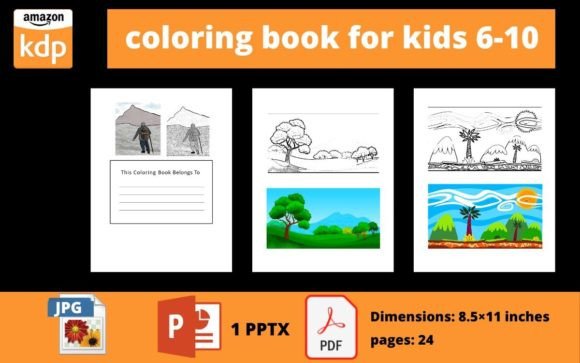
Walk into any creative space designed for children aged six to ten, and you will almost certainly find a stack of coloring pages. What looks like simple entertainment is actually a sophisticated tool for cognitive development, emotional regulation, and skill-building. The coloring book for kids 6-10 has moved far beyond basic outlines of cartoon characters. Today’s versions are designed with intention—balancing complexity with approachability, and often doubling as a launchpad for small businesses and independent creators on platforms like Amazon KDP. One standout example comes with a complete, ready-to-use package: 24 pages of high-quality interior art, delivered in multiple file formats and fully prepared for both print and digital use.
This isn’t just a trend; it’s a response to how children interact with analog tools in a screen-saturated world. Parents, educators, and entrepreneurs all benefit when a coloring book is built with care. The dimensions, paper readiness, and image resolution matter. The fact that a template offers 8.5×11 inch pages with bleed, a PPTX file for easy editing, a print-ready PDF, and 48 JPG and PNG images changes what is possible—from a rainy-day activity to a professional product that can be uploaded directly to Kindle Direct Publishing.
Why Ages 6 to 10 Represent a Creative Sweet Spot
Children in this age range are navigating a critical transition. They are developing fine motor precision, reading independently, and forming stronger preferences for themes and aesthetics. A coloring book designed for this group must offer enough detail to hold attention without becoming frustrating. The 24-page length is intentional: it provides variety week after week without overwhelming a young artist who is also juggling school and extracurriculars. Themes might range from animals and mandalas to space exploration and geometric patterns—each page becomes a quiet exercise in decision-making and self-expression.
Educators often note that coloring inside lines strengthens the same hand muscles needed for handwriting. For a seven-year-old, choosing a color palette for an ocean scene is an early lesson in composition. The simplicity hides depth. When the interior is marked as high-quality, it translates to crisp lines that print cleanly without pixelation, reducing eye strain and making the experience feel more polished. That quality also means the book can be used with pencils, gel pens, or even light watercolor washes without the paper buckling instantly, if printed on appropriate stock.
The Shift Toward Tangible Experiences in a Digital Childhood
Screen time averages continue to climb, and with them, concerns about attention spans and sleep disruption. Against that backdrop, physical coloring books have experienced a quiet renaissance. They require no notifications, no blue light, and no algorithmic feed. A parent handing a child a coloring book is offering a full-sensory reset: the smell of paper, the sound of a pencil scratching, the tactile feedback of turning a page. The coloring book for kids 6-10 complements digital learning without competing with it. It becomes a bridge between high-tech school tools and low-tech mindfulness.
For families who travel, a sleek 8.5×11 inch book fits neatly into a backpack alongside a tablet or a lunch box. Because many modern templates come with both PDF and image files, parents can also print single sheets at home when only one child wants to color a specific design, preserving the book for future use. This flexibility is quietly reshaping how people think about activity books—not as disposable items but as reusable resources that adapt to the rhythm of family life.
The Creator Economy Meets the Classic Coloring Book
Another force driving attention toward this niche is the low barrier to entry for content creators. A template that arrives as a fully prepared Amazon KDP interior removes almost every technical hurdle. The specs are telling: 1 PPTX allows a designer to customize text, add branding, or tweak images without starting from scratch. 1 PDF ensures the file is press-ready. The 48 JPG and PNG files give sellers the ability to use individual pages as promotional material, social media teasers, or even standalone printable products. Bleed—the extended image area that prevents white margins after trimming—is included by default, meaning the final printed book will look professional, not homemade.
Entrepreneurs, bloggers, and educators building a brand around children's content can take such a template, personalize it with their own logo or a brief message, and have a product live on KDP in hours. This isn't a hypothetical. In parenting communities and teacher marketplaces, print-on-demand coloring books consistently rank among the top impulse purchases. The speed from idea to income is startling, but it relies on having a solid foundation. A poorly formatted interior with missing bleed or low-resolution imagery will generate returns and negative reviews. That’s why the specification list here matters: it’s a checklist of trust signals for anyone entering the market.
What Makes a Coloring Book Interior “High Quality”
High-quality interior is a phrase that gets thrown around loosely, but in practice it means several things working together. Line art must be clean and closed, so that a six-year-old using a chunky marker can color within boundaries without the color leaking into unintended areas. Resolution needs to be at least 300 DPI, which ensures that when an 8.5×11 inch page is printed, every feather on a bird or scale on a dragon remains sharp. The black-and-white contrast should be well-balanced—not so dark that it becomes muddy with pencil shading, and not so light that it disappears under wax.
When a template is described as ready for upload or printable, it also implies that the files are organized logically. A busy teacher shouldn’t have to hunt through dozens of mislabeled PNGs to find a specific animal page. The thoughtful arrangement of 48 JPG and PNG files, alongside the editable PPTX, suggests that the creator understands diverse workflows—someone might want to print from a tablet in a kindergarten classroom, while another might drag images into Canva to build a custom gift book for a grandchild.
Practical Ways to Use a 24-Page Coloring Book Template
The obvious use case is physical book production via KDP. A seller uploads the PDF, creates a cover, sets a price, and within 72 hours the book appears on Amazon. But that’s just one path. The 48 image files open up other avenues:
- Educational materials: A science tutor can integrate animal coloring pages into a lesson on habitats, using the PNG files to create a digital worksheet bundle.
- Party favors: For a birthday with a unicorn or dinosaur theme, a parent can select five JPG pages, print them on cardstock, and tie them with a small pack of crayons.
- Sensory breaks: Occupational therapists often keep a binder of printed coloring sheets for children who need a calming, repetitive activity. The 8.5×11 format fits standard sheet protectors and binders seamlessly.
- Content marketing: A family blogger can offer two free coloring pages as a lead magnet, growing an email list while giving value. The PPTX file lets them easily add a subtle URL or logo.
- Hybrid publishing: Small presses focused on children’s activity books can use the template as a base, combine it with original poetry or facts, and create a series that stands out on Etsy or in local bookstores.
None of these uses requires advanced graphic design skills. The inclusion of a PowerPoint file is particularly clever because PPTX is widely understood, even by novice creators. Edits are visual and immediate, lowering the intimidation that sometimes comes with professional design software.
How the KDP Platform Rewards Ready-to-Upload Assets
Amazon’s Kindle Direct Publishing has matured into a space where quality differentiates success from obscurity. Customers flipping through the “Look Inside” feature will notice if lines are cut off at the edges or if images appear blurry. The bleed specification ensures that artwork extends safely to the trim edge, so even the most marginal buyer sees a book that rivals something from a traditional publisher. The combination of a verified PDF interior and high-resolution source files reduces the chances of formatting errors that trigger content rejection or poor customer experiences.
Moreover, KDP’s algorithm considers factors like sales velocity and review sentiment. A well-constructed book that delights children and parents is more likely to generate organic word-of-mouth and positive ratings. In a crowded category, the difference between a generic AI-generated collection and a carefully designed 24-page book becomes apparent quickly. Sellers who use a template with a high-quality interior and demonstrate attention to detail—proper margin setup, consistent line weight, age-appropriate themes—are playing a long game that builds a brand, not just a one-off product.
Observations on Design, Childhood, and Market Preferences
There’s a noticeable shift in what parents and educators want from a coloring book for this age bracket. Simplicity still has a place, but many are seeking pages that spark conversation. A coloring page of a world map with animals native to each continent, for example, becomes a geography lesson without a lecture. A mandala with a moderate level of detail helps an anxious eight-year-old self-soothe. The coloring book for kids 6-10 that respects the user’s intelligence while remaining playful will always outperform one that underestimates them.
From a market perspective, the 8.5×11 inch dimension has become the standard for a reason: it’s the same size as many picture books, it’s economical for printing, and it fits on retail shelves with ease. A 24-page count keeps the book lightweight and affordable, which is crucial when a parent is deciding between a coloring book and another treat at checkout. Creators who understand these practical constraints are better positioned to serve repeat customers—teachers buying for classrooms, grandparents sending care packages, and subscription box curators who include a small activity book each month.
Building a Resource Library That Grows With the Child
Because the template comes with separate PNG and JPG files for each design, families and educators can build a rotating library. One week, a child works on a detailed castle scene; the next, they explore a garden filled with insects to label. The fact that pages are not bound in a fixed order when used digitally means adults can curate the experience. A parent might notice their child is struggling with symmetry and print out a series of mirrored patterns, turning coloring time into an intentional developmental tool.
This adaptability is what gives a simple set of 24 pages surprising longevity. The files never wear out. They can be printed on different paper types—watercolor paper for painting, glossy cardstock for markers, recycled paper for eco-conscious families. Each variation keeps the activity fresh. The PPTX file even allows for adding a child’s name before printing, turning a generic page into a personalized award or a custom chore chart with coloring elements. These small touches build emotional connection, which is exactly what turns a casual user into someone who seeks out more work from the same creator.
Starting a Sustainable Creative Habit
For the adult reading this—whether an entrepreneur looking to start a passive income stream, a teacher building curriculum, or a parent wanting better offline activities—the throughline is clear. Investing in a well-specified, thoughtfully assembled coloring book template is a low-cost entry into meaningful creative work. The deliverables are tangible: 1 PPTX, 1 PDF, 48 JPG, PNG, and bleed aren’t bullet points to skim. They represent hours saved on formatting, troubleshooting, and redesigning. They are proof that someone has already answered the difficult technical questions so that you can focus on what matters—connecting with a child, a customer, or a student.
The coloring book for kids 6-10 might once have been an afterthought, an impulse buy in a grocery aisle. Now it stands at the intersection of mindful parenting, accessible entrepreneurship, and design-driven quality. Whether you upload it to KDP and watch it sell while you sleep, or you print one page at a time to tuck inside a lunchbox, the value is no longer in the paper itself but in the potential it unlocks. And when the template is built to professional standards from the start, that potential moves from possibility to practicality with remarkable ease.