Crypto Wallet Logbook KDP Interior: A Strategic Tool for Tracking, Publishing, and Long-Term Clarity
Keeping a clear record of cryptocurrency activity is no longer optional—it’s a practical necessity for anyone who moves money across wallets, exchanges, and decentralized platforms. The Crypto Wallet Logbook KDP Interior offers a ready-made foundation for publishers who want to create a physical ledger that serves this exact need. But its value runs deeper than a simple checklist of transaction lines. Under the surface, it’s a carefully structured template that can help an end user replace fragmented spreadsheets and mental notes with a single, intentional record. For the creator or entrepreneur behind the book, it’s a way to enter a growing market with a product that answers a quiet, persistent pain point—making sense of crypto chaos without staring at a screen.
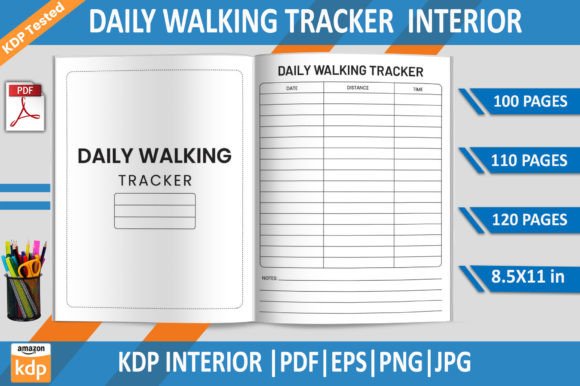
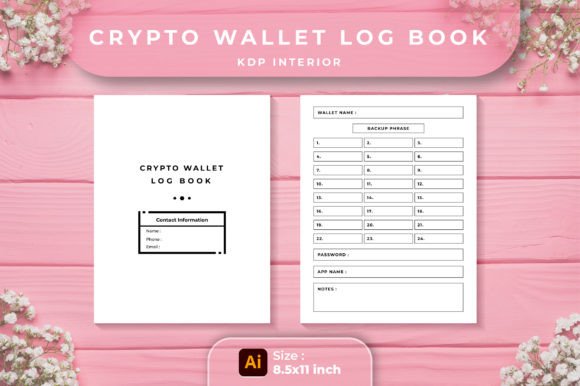
Whether you’re a KDP publisher looking to launch a low-content book, a freelancer helping clients organize digital assets, or a crypto holder who simply wants a better paper trail, the conversation starts with understanding the strategic layers built into this interior file set. It includes multiple page count options—100, 110, and 120 pages—delivered as print-ready PDFs, along with fully editable source files in Ai and EPS, plus SVG, PNG, and high-quality JPG versions. All formatted at 8.5 x 11 inches, resizable, at 300 DPI. That’s not just a bundle; it’s a flexible production kit that can be molded to different goals, and that’s where thoughtful planning makes all the difference.
What a Crypto Wallet Logbook Really Solves for the End User
Before you place this interior into a cover and hit publish, it’s worth understanding why someone would reach for a physical logbook in an industry built on software. The answer sits in three behavioral gaps. First, information dispersal: a typical investor holds multiple wallets—hot, cold, exchange-based—each with its own interface, history, and security layer. Second, memory overload: dates, amounts, fees, counterparty addresses, and notes blend together after a few dozen transactions. Third, tax and audit readiness: many tax authorities now require detailed records, yet most platforms only offer recent exports or clunky CSV files. A well-designed logbook that prompts for wallet name, transaction type, date, amount, fees, and running balance brings structure to what otherwise remains scattered. The Crypto Wallet Logbook KDP Interior is built around these exact fields, turning a blank page into a guided prompt that encourages consistency rather than guesswork.
Strategic Opportunities for KDP Publishers and Creators
Publishing a logbook might look simple—add a cover, upload, sell. But the difference between a title that gathers dust and one that builds a steady stream of BSR traction often comes down to how you position the interior. With the Crypto Wallet Logbook KDP Interior, you’re not starting from scratch; you’re getting a professionally structured skeleton that can be adapted to a specific niche angle. That angle matters more than ever in the low-content space. Instead of a generic “logbook,” consider these positioning paths:
- For the DeFi yield farmer: emphasize sections for protocol name, liquidity pool, impermanent loss tracking, and harvest dates. Even if the base interior doesn’t have those exact headings, the editable Ai and EPS files let you add or tweak column labels without rebuilding the layout.
- For the long-term HODLer: frame it as a wealth preservation journal, with space to note cold storage locations (without compromising security), multi-signature setups, and inheritance instructions.
- For the active trader: pitch it as a companion to exchange-based activity, where manual entry reinforces pattern recognition and helps flag impulsive moves.
- For the crypto tax filer: align the logbook columns directly with common tax software import requirements, making it a bridge between raw data and annual reporting.
The editable source files are what unlock this level of customization. By modifying a column header, adding a footer disclaimer, or inserting a short guide page, you shift from a commodity product to something that solves a more specific problem for a clearly defined audience. That’s not just better marketing—it’s better customer experience, which translates into reviews and repeat visibility.
Planning the Interior Layout to Match Real Use Cases
A logbook interior isn’t just a template—it’s a user’s daily invitation to engage with a habit. If the page feels cramped, confusing, or irrelevant, it gets abandoned. The Crypto Wallet Log Book KDP Interior file set has been constructed with a clean, uncluttered aesthetic that respects the serious nature of financial recordkeeping. But to maximize its effectiveness, you need to think through a few operational decisions before finalizing your cover and description:
- Page count selection: The 100-, 110-, and 120-page PDF interiors give you room to match different usage intensities. A trader might fill a 100-page book in months; a casual holder might take two years with 120 pages. Consider offering two versions—a compact edition and a comprehensive edition—to cover more keyword permutations like “Crypto Wallet Log Book KDP Interior 120 pages.”
- Balancing structure and free space: Every row accounts for hard data, but a thoughtful logbook also leaves a small notes section per entry. If the base layout doesn’t already include one, use the Ai file to carve out a narrow “context” column. Something as simple as “Reason for transfer” or “Market condition” turns a data point into a decision journal.
- Print quality and durability: Since it’s a workbook that may see frequent handling, you might mention in your description that it prints crisp at 300 DPI and works well with sturdy paper. The high-resolution JPG and PNG files let you create marketing images that show the interior at actual size, building buyer confidence.
Using the Logbook as a Brand-Building Asset, Not Just Another SKU
Many KDP publishers treat interiors as interchangeable commodities—swap a cover, reuse the same guts, move on. But when you approach the Crypto Wallet Logbook KDP Interior as part of a larger brand ecosystem, it can do more than generate royalties. A blog writer or content creator, for instance, might publish the logbook under the same brand as a crypto education site. The interior becomes a tangible extension of the advice readers already trust. A financial coach who consults on digital assets could bundle a customized version of the logbook as a client workbook, reinforcing their methodology. The publication itself starts to function as a positioning tool: it signals that you take this topic seriously enough to invest in a physical, structured product, not just a fleeting social media post.
Don’t overlook the resizing capability either. While the default is 8.5 x 11 inches, the editable vectors let you scale down to a compact 6 x 9 format that fits in a safe or travel bag, or up slightly for a desk-friendly A4 version. These variations can be published as separate ASINs, each targeting different customer preferences without starting over from a blank canvas.
Decision-Making Guidance: Is This Interior Right for Your Specific Goal?
Before you download and start editing, it’s worth asking a few calibration questions. Not because the Crypto Wallet Logbook for KDP Interior is lacking—it’s well-crafted and print-ready—but because even the best template fails when it’s applied to a fuzzy objective. Clarify your primary intent:
- Are you trying to test the crypto logbook niche quickly? Use the 100-page PDF as-is, pair it with a professionally designed cover that speaks to a single audience (say, Bitcoin-only investors), and launch within days. This reduces time-to-market and gives you real feedback without the complexity of editing source files.
- Are you building a differentiated product line? Invest time in the Ai or EPS files. Add a “Year-End Summary” page, a private key backup checklist (non-sensitive prompts only), or a quick-start guide that explains how to fill each column. Those additions raise perceived value and make price comparisons less relevant.
- Are you creating the logbook for your own personal use rather than publishing? The PDF is still perfectly usable. Print it at a local print shop, bind it, and you have a dedicated ledger that operates offline—a privacy advantage that no online spreadsheet can match.
One often-missed risk surfaces when personal and commercial goals blur. If you intend to publish, don’t simply take the vanilla interior and list it with a generic title. The market has hundreds of low-effort crypto logbooks. Without strategic input, you risk blending into that crowd. The interior gives you the bones; you must add the voice—through your cover design, subtitle, and keyword strategy—to make it resonate. If you skip that step, the product may exist without ever really being found.
Integrating the Logbook Into a Broader Crypto Management Routine
For the end user—whether they bought your KDP book or printed the logbook for themselves—the interior only creates value when used with intention. A common mistake is treating the logbook as a passive record, filling it in weeks after the fact. That undermines its role as a proactive tool. Instead, encourage users (through your product description or a printed intro page) to adopt a simple, repeatable rhythm:
- Immediate entry after each transaction: even a quick note with the time, wallet label, amount, and fee while details are fresh.
- Weekly reconciliation: cross-check the logbook against exchange histories or blockchain explorers. Flag any mismatches immediately.
- Monthly review for patterns: look at fees paid, frequency of transfers, and portfolio allocation. Are gas fees eating into yield? Is small-value trading adding noise? The written record often reveals what dashboards hide.
- Annual archive: once a logbook is full, store it securely. For tax purposes, a completed physical ledger with contemporaneous entries carries more weight than a spreadsheet created months later.
This level of intentionality also creates a secondary market opportunity. If you’re a publisher, you can create a companion product—say, a “Crypto Portfolio Review Workbook” that builds on the logbook data—forming a series that customers return to. The initial interior becomes a gateway, not just a one-off purchase.
What to Watch Out For: Limitations and Smart Adaptations
While the Crypto Wallet Logbook KDP Interior is a robust starting point, no pre-made template will foresee every edge case. Crypto users sometimes deal with complex transaction types—NFT minting, airdrop claims, staking rewards, cross-chain bridges—that may not fit neatly into the standard columns. Using the editable EPS or Ai files, you can add a “transaction sub-type” field or an “ancillary notes” section to catch those events. If you’re a publisher, consider including a short educational page that explains how to log non-standard entries. This small effort preempts customer frustration and reduces returns.
Another nuance: the logbook’s strongest value proposition—privacy through offline storage—can also be its weakness. A lost physical book means lost records. Encourage users to periodically photograph completed pages (securely, of course) as a backup. For the KDP description, avoid promising tax compliance or audit-proof results; simply position it as a reliable aid, not a legal guarantee. That honest framing builds trust and aligns with E-E-A-T principles better than overclaiming.
Finally, keep an eye on the shifting crypto regulatory landscape. If new disclosure requirements emerge, you may need to update the interior. Because you have the source files, you can release revised editions without starting from zero—a significant long-term advantage for a publisher who plans to stay relevant.
Bringing It All Together: The Logbook as a Decision Support System
At first glance, a Crypto Wallet Logbook might seem like a simple spreadsheet converted to paper. But when you treat the KDP interior as a strategic asset—whether for your own use or as a product to publish—it becomes something more. It’s a quiet infrastructure that helps people make better decisions by seeing their crypto activity over time. For the creator, it’s a product that meets a genuine need in a technology-heavy space where tactile tools are underappreciated. The included source files give you the freedom to adapt, specialize, and iterate far beyond what a fixed PDF would allow. The high-resolution, resizable format keeps production quality high, whether you’re printing a single copy for yourself or selling hundreds through Amazon’s KDP platform.
The key is to avoid randomness. Define the exact user you want to serve, adjust the template to speak directly to that user’s workflow, and then present the final logbook not as a blank notebook, but as a disciplined companion for navigating an otherwise chaotic digital landscape. When you do that, the Crypto Wallet Logbook KDP Interior stops being a file download and starts being a meaningful step toward clarity—for you and for the customers who will rely on it.